"I Really Hope He Puts a 3 onto That Axis" -- a Review of "Sky Team" the Board Game
"2000 feet."
"All landing gears activated."
"1000 feet."
"All flaps activated."
"Braking."
"We've landed. Great work, team."
...
None of the above conversation happens, at least not in Sky Team.
It's not supposed to happen.
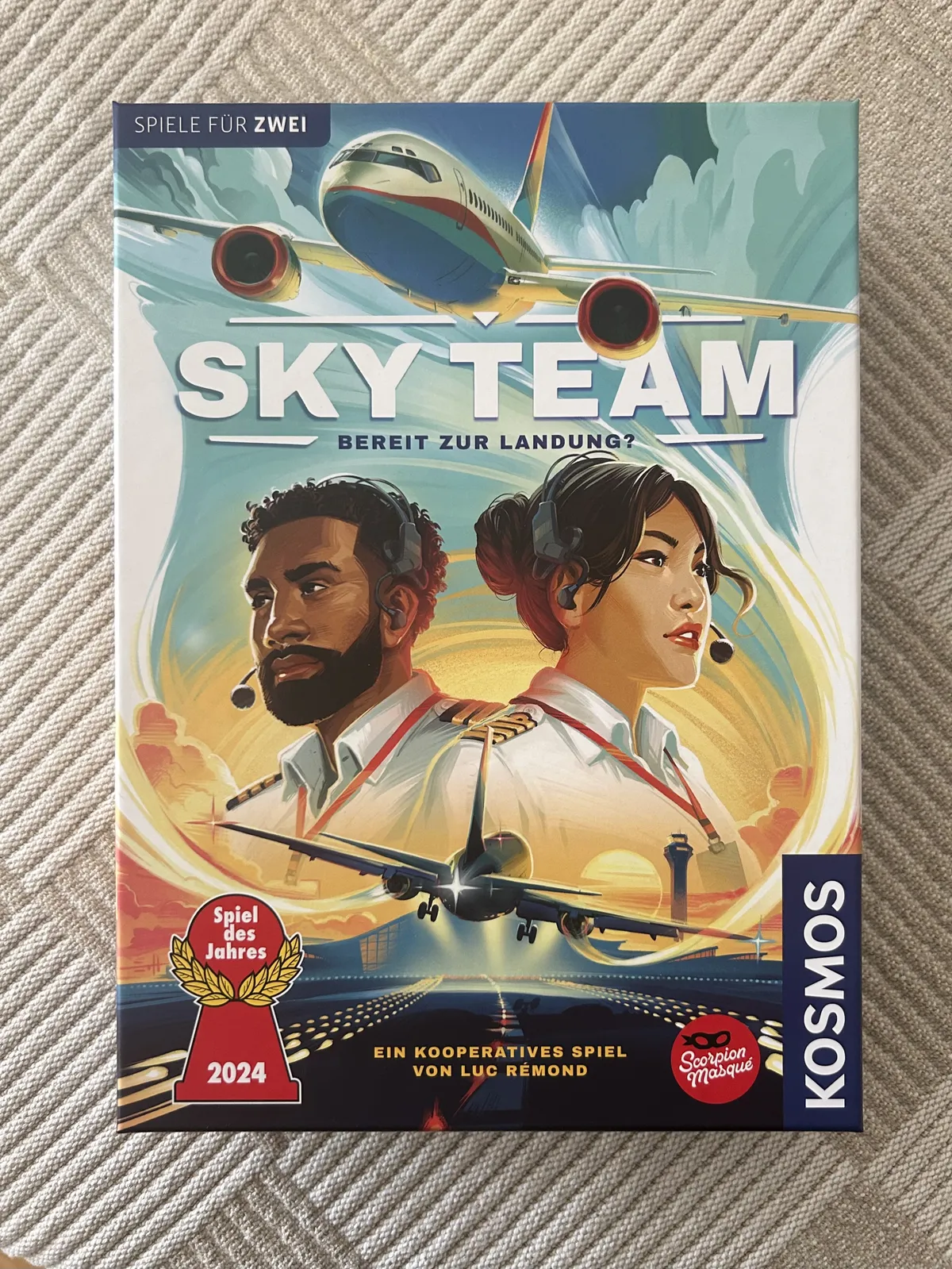
Winner of the Spiel des Jahres (game of the year) award in 2024, Sky Team is a cooperative game with limited communication for two players.
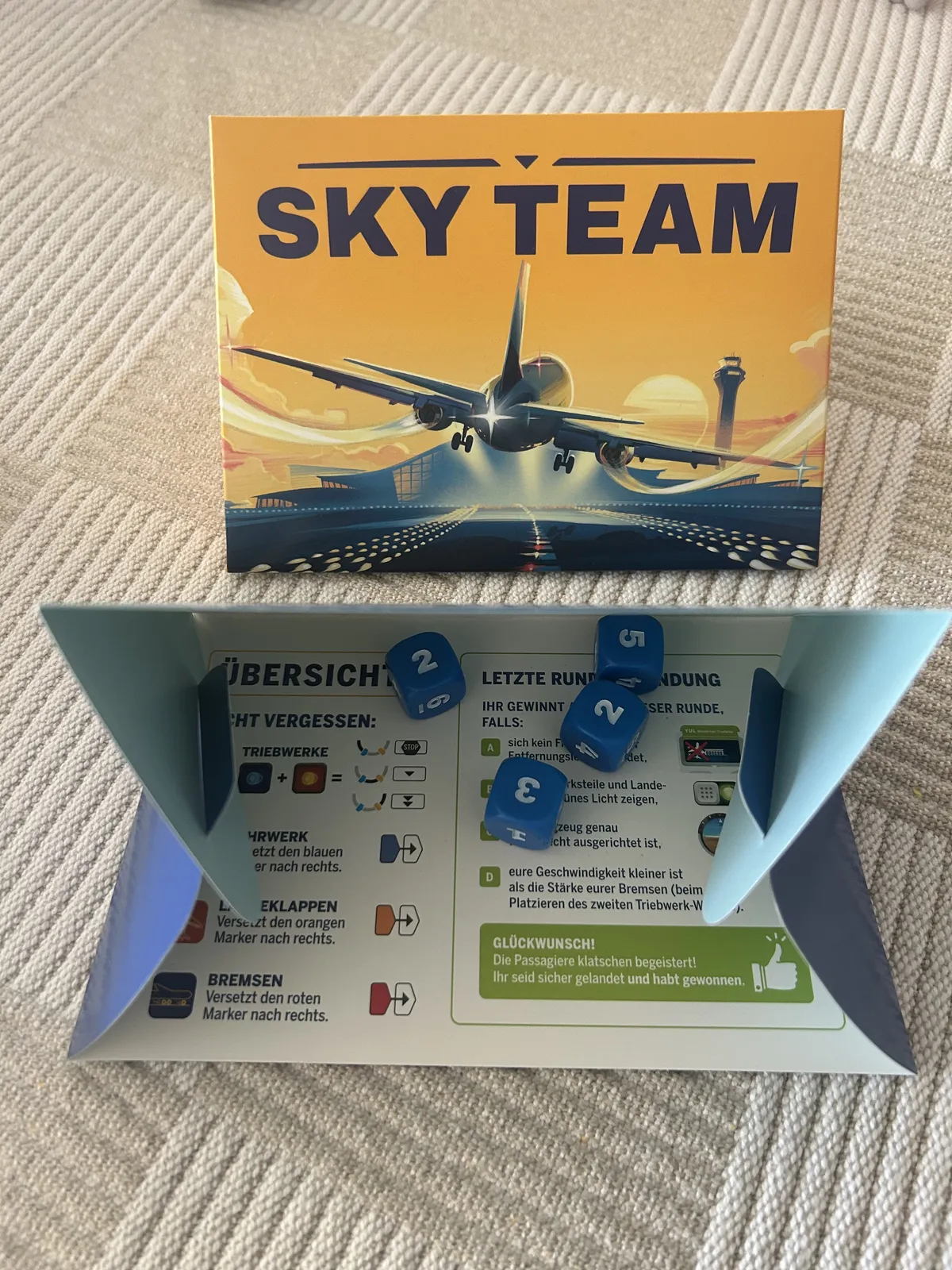
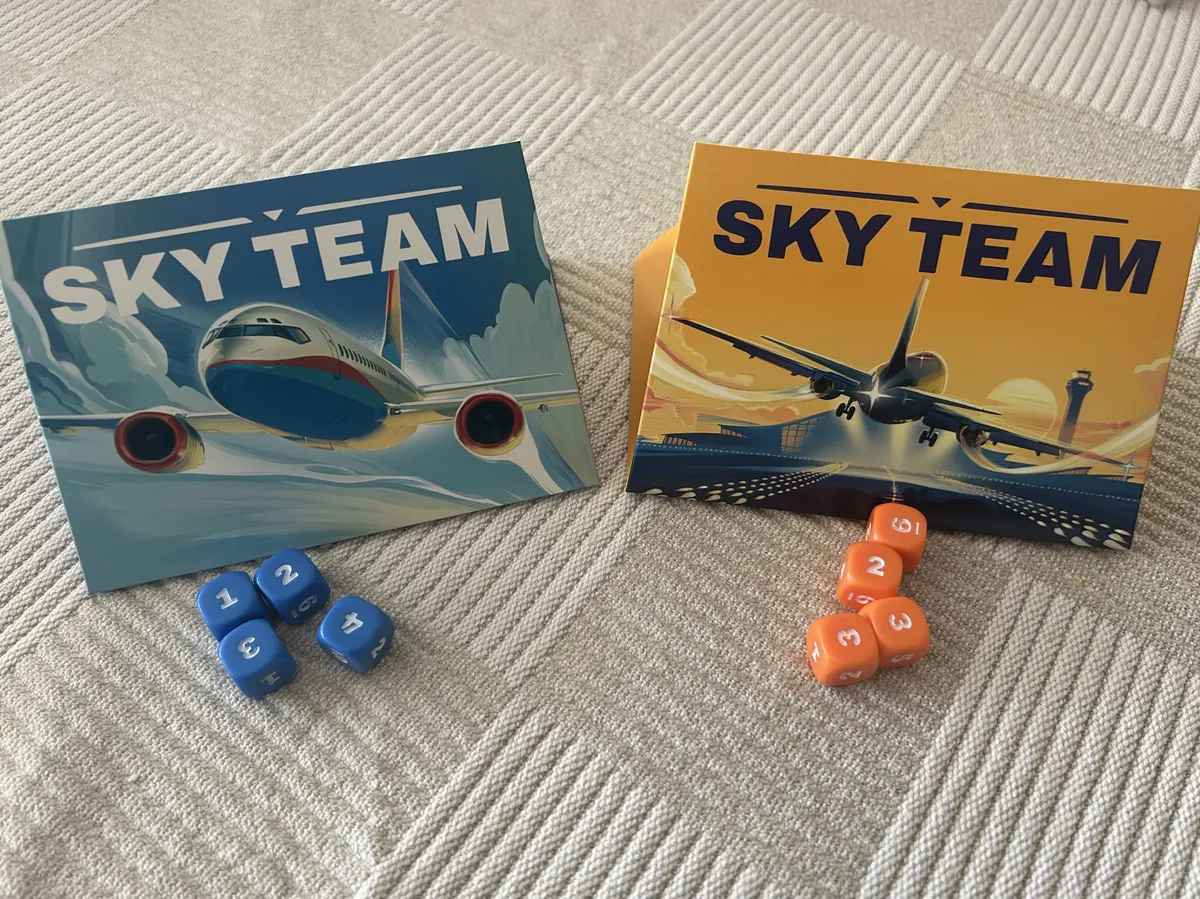
In this game, players work together to land a commercial aircraft. Every turn, each player rolls four dice. This is done behind a screen, so that the other player does not see the results of the dice.
The pair then has to determine where to place their respective dice on the board, in order to safely descend the aircraft toward the airport -- all through silent dice placement.
Since the dice results are hidden from each other, players have to partially rely on guessing each other's dice numbers to strategize within every turn.
Silent dice placement is in itself a form of communication, which is what makes this game special. As the rulebook says, "A die is an 'action' in the cockpit, but also information for your teammate. If you put this value on this space at this moment in the game, what can they deduce from this? Are you helping them make good choices?" (Rulebook Sky Team Landing Procedure, page 12)
Verbal communication is not entirely banned from the game, but it only occurs in between turns, in what is known as "the briefing period." Before the dice rolling, players can discuss and agree upon a strategy for the next turn.
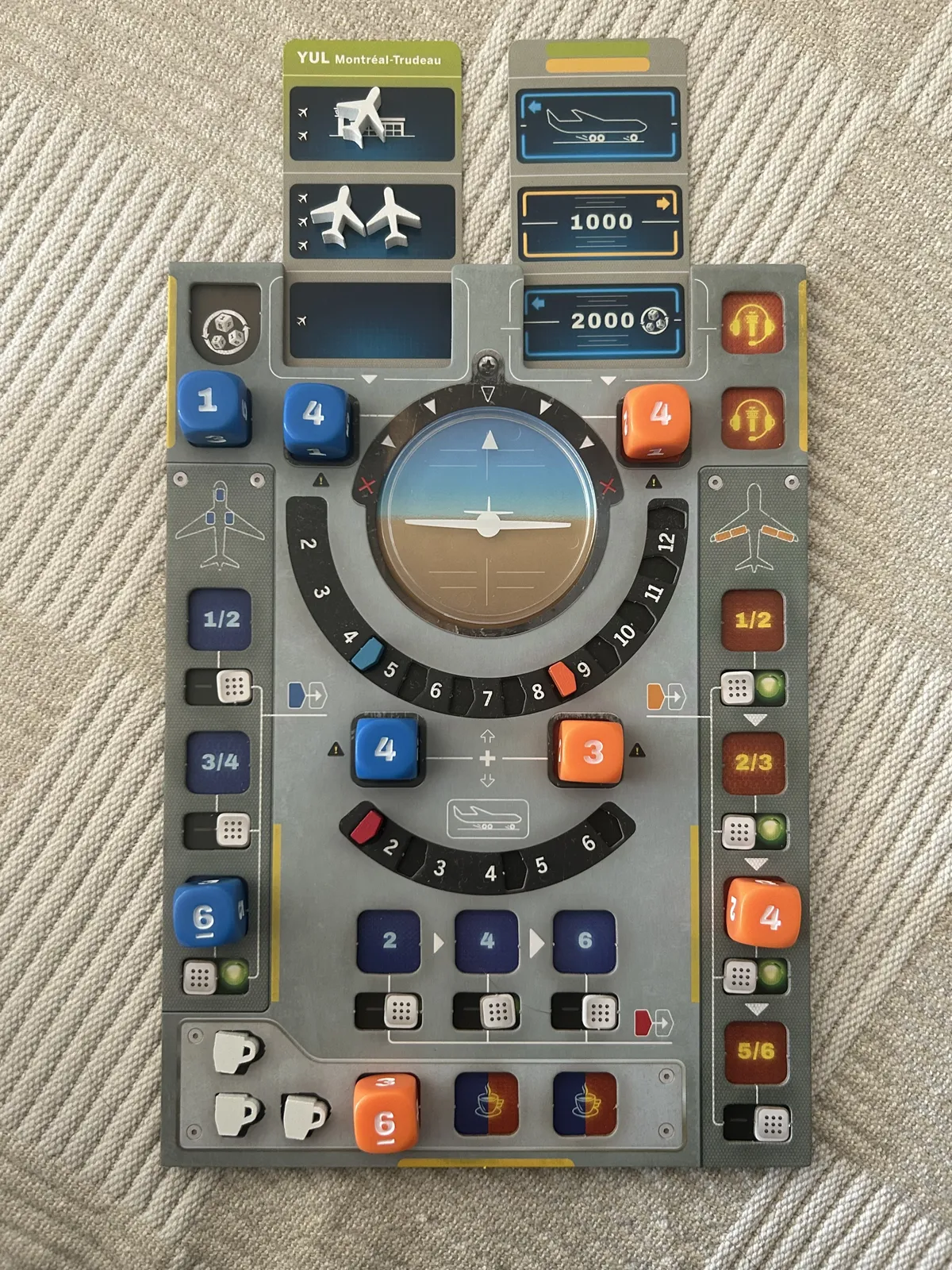
The game is one of a kind, with well made parts and a unique board, which players have to assemble according to instructions in the rulebook. The board is thick and durable.
At the center of the board are (from top to bottom) axis, speed, engine, and brakes.
Radio (both sides), landing gears (left), and flaps (right) are on the sides.
There is even a coffee tray at the bottom and what the game designers call "concentration."
This pragmatically designed board demonstrates the designers' inspirations from real-life aviation.
Small parts complement the board and enhance players' gaming experiences, namely: an axis that turns, buttons to be slid left and right to indicate activated landing gears and flaps, small coffee cups, and small airplanes to indicate other planes that are also waiting to land.
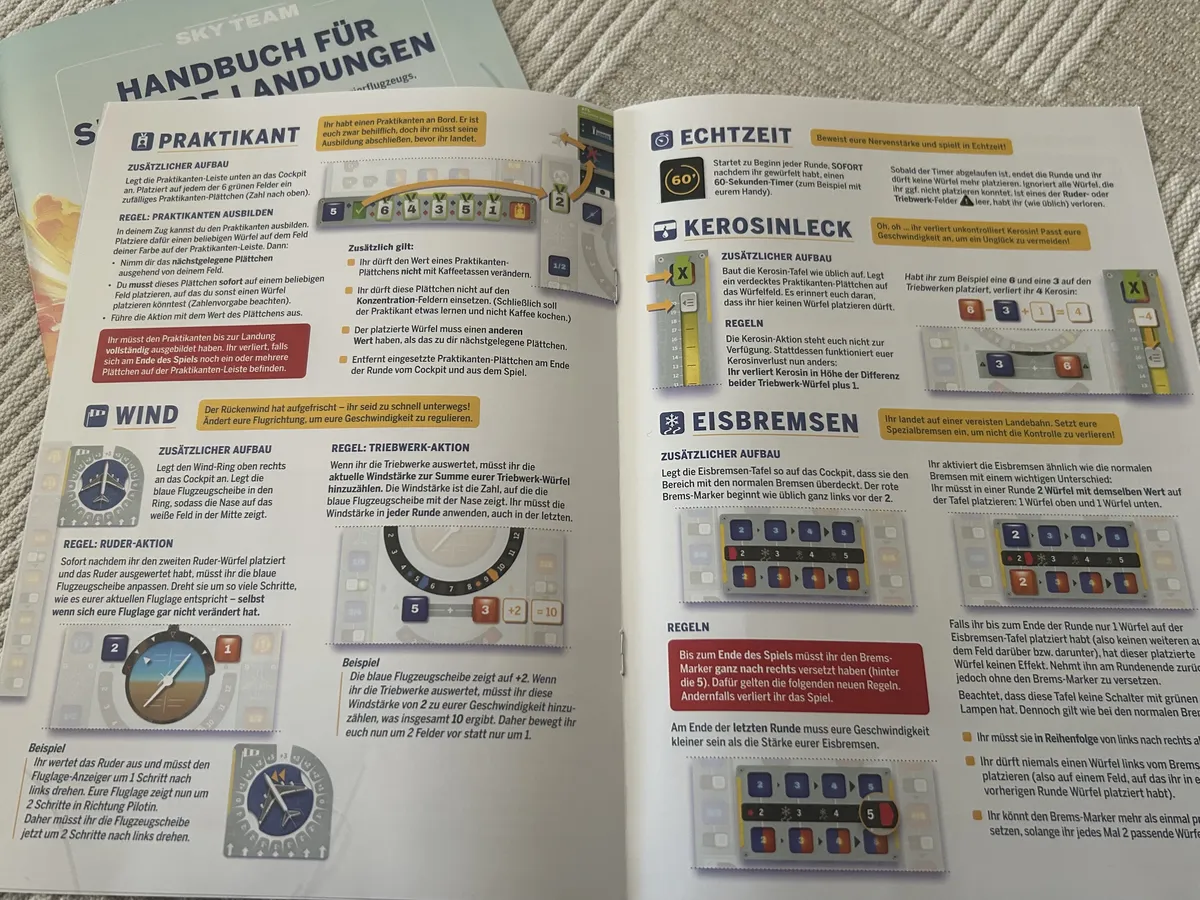
Despite its somewhat daunting length at first, the rulebook is clearly written, with featured images to aid players' understanding.
With a complexity rating of 2.04/5 on "Board Game Geek," Sky Team is considered a medium-light-weight game, whose rules are relatively easy for players to understand.
The "Did You Know?" sections are a real plus to the rulebook, providing fun facts about aviation in real life. "Did You Know? In real life, airplanes work on 3 axes: yaw (nose left or right), pitch (nose up or down), and roll. The illustration you see here is a simplification, as it only represents the roll axis." (Rulebook Sky Team Landing Procedure, page 5)
The graphic design of the game is superb. The board has a clean and modern look. The orange-blue combination is generally colorblind-friendly. However, green and red scenarios would cause problems for players with congenital red-green color blindness. (On red vs green, see the next 2 paragraphs.)
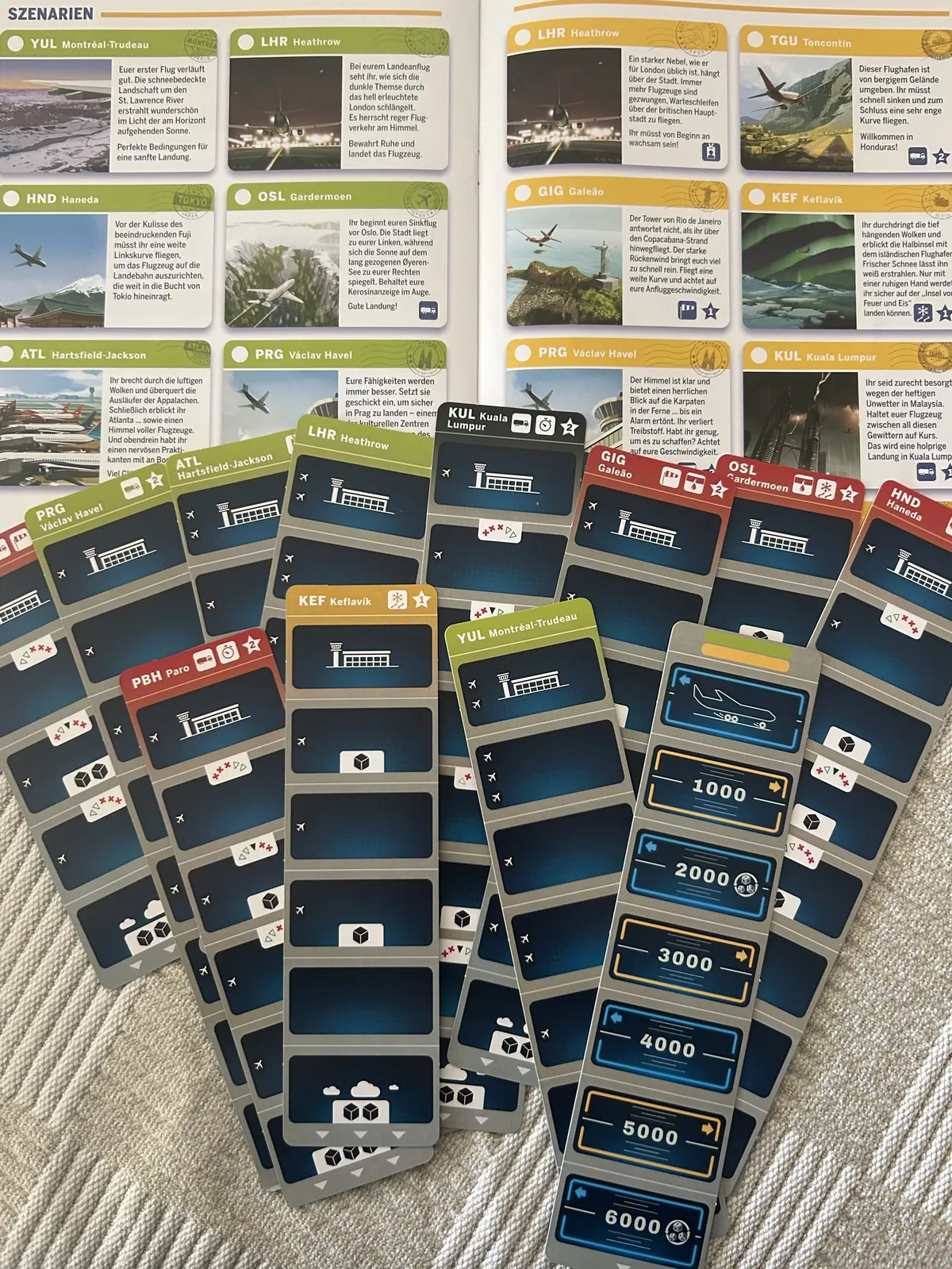
The game has a lot of replay possibilities. The designers have provided players with 21 different airports and/or scenarios, in which players land their aircraft.
The scenarios are marked with difficulty levels green, yellow, red, and black, from the easiest to the most difficult. This is where there would be serious problems for players with congenital red-green color blindness. For such players, distinguishing between the easier (green) and the harder (red) scenarios would be very difficult.
Across the 21 scenarios, players deal with various additional factors when landing their aircraft, including suddenly more planes in front of them, icy runway, kerosine leaks, tail wind, and even an untrained intern.
Luck plays a relatively big role in Sky Team, as much of the strategizing and silent communication is dependent on the dice values.
This should not be a turn-off for prospective players. "Concentration," or in other words the coffee tray, is precisely designed to balance with luck in the game.
Players place dice to store up coffee and may decide to "drink up" a cup anytime they wish to alter the value of a die. Each spent coffee token allows the player to add or subtract 1 from the value of a current die.
Players also get chances to re-roll their die/dice if their current airport scenario grants them with such possibilities, as is the case in "Montreal" and some others.
The game is reasonably priced, given its quality and replayability.
In most (online) stores in the U.S. Sky Team is priced to be between $29.99 and $32.99. In Germany, where we bought our copy, it is priced to be €24.99.

All in all, Sky Team, the aviation-themed (mostly) silent cooperative game for two players is a gem in the co-op genre.
It is well balanced between luck and strategy and has great replayability.
For anyone who is a fan of or would like to try co-op games with limited communication, Sky Team is a must play.